
国際学の授業
Our school has introduced a new subject called International Studies. I’m very excited to be in this class. We will learn about other countries and what we have in common. Then, we will exchange e-mails with students from a school on the East Coast of the United States. After we receive their replies, we will write a report about their holiday traditions. Next term, some of the students will be invited to visit our school. I want to recommend some delicious local food for them to try and take them to the city museum. Most of all, I hope we can get along with each other and they can feel at home.
① Our school has introduced a new subject called International Studies.
文型:SVO
S(主語):Our school
V(動詞):has introduced(現在完了)
O(目的語):a new subject
補足:called International Studies(subject を説明)
ポイント
現在完了(has introduced)
→「過去に導入し、今もその状態が続いている」
called ~ は 過去分詞の形容詞用法
→「~と呼ばれる」
② I’m very excited to be in this class.
文型:SVC
S:I
V:am
C:very excited
ポイント
to be in this class:理由・内容を表す不定詞
excited は「(感情が)高ぶっている」
③ We will learn about other countries and what we have in common.
文型:SVO
S:We
V:will learn
O:
about other countries
and what we have in common
ポイント
what we have in common
→ 名詞節(learn の目的語)
what = 「~すること/もの」
④ Then, we will exchange e-mails with students from a school on the East Coast of the United States.
文型:SVO
S:we
V:will exchange
O:e-mails
修飾語
with students ~:相手
from a school on the East Coast ~:students を修飾
⑤ After we receive their replies, we will write a report about their holiday traditions.
構造
After ~:時を表す従属節
主節:we will write a report
文型(主節):SVO
S:we
V:will write
O:a report
ポイント
After節の中は現在形
→ 未来のことでも will は使わない
⑥ Next term, some of the students will be invited to visit our school.
文型:SVO(受動態)
S:some of the students
V:will be invited
O:なし
to visit our school:招待の内容
ポイント
invite O to ~ の受動
→ be invited to ~
⑦ I want to recommend some delicious local food for them to try and take them to the city museum.
文型(主):SVO
S:I
V:want
O:to recommend ~(不定詞)
中の構造
recommend A for B to try
A:some delicious local food
B:for them
to try:目的
and take them ~
→ recommend と 並列
ポイント
for + 人 + to 不定詞
recommend + 目的語 が基本
⑧ Most of all, I hope we can get along with each other and they can feel at home.
文型
I hope + 名詞節
hope節の中(並列)
we can get along with each other
they can feel at home
ポイント
get along with ~:仲良くやっていく
feel at home:くつろぐ、安心する
全体まとめ(超重要)
文法項目 出現例
現在完了 has introduced
不定詞 to be / to visit / to recommend
名詞節 what we have in common
受動態 will be invited
時の副詞節 After we receive ~
並列構造 and / and
私たちの学校は「国際学」と呼ばれる新しい科目を導入しました。私はこの授業を受けるのがとても楽しみです。私たちはほかの国々のことや、私たちが共有しているものについて学習します。それから、アメリカの東海岸にある学校の生徒たちとEメールを交換します。彼らの返事をもらった後、彼らの祝祭日のしきたりについてレポートを書きます。次の学期には、私たちの学校を訪れるようその生徒の一部が招待されます。私は彼らに地元のおいしい食べ物を食べてみるよう勧めたり、市立博物館に彼らを連れて行ったりしたいと思います。何よりも、お互いに仲良くして、彼らがくつろぐことができたらよいと思います。
理科に関心を持たせるために
Many teenagers today are tired of studying traditional subjects such as biology. To encourage more students to take an interest in nature, local schools in my hometown are going to have a competition to design an original poster. A group of university professors will pick the winner. The winning poster will be published in a magazine and the designer will get a cash prize. If it proves popular, this competition could become an annual event.
① Many teenagers today are tired of studying traditional subjects such as biology.
文型:SVC
S(主語):Many teenagers today
V(動詞):are
C(補語):tired of studying traditional subjects such as biology
👉 be動詞+形容詞の典型的なSVC
tired of ~ = 「~に疲れている」
studying ~ は 動名詞で of の目的語
② To encourage more students to take an interest in nature, local schools in my hometown are going to have a competition to design an original poster.
文型(メイン):SVO
S:local schools in my hometown
V:are going to have
O:a competition
付加情報
To encourage ~ nature:目的を表す不定詞(文全体を修飾)
to design an original poster:competition を説明する不定詞
👉 主文は very simple
「学校が → コンテストを → 開く」
③ A group of university professors will pick the winner.
文型:SVO
S:A group of university professors
V:will pick
O:the winner
👉 A group of ~ は 単数扱い
→ 動詞は pick(複数形に見えるがOK)
④ The winning poster will be published in a magazine and the designer will get a cash prize.
文①
文型:SVO(受動態)
S:The winning poster
V:will be published
O:なし(受動態)
修飾:in a magazine
文②
文型:SVO
S:the designer
V:will get
O:a cash prize
👉 and で2文が並列
⑤ If it proves popular, this competition could become an annual event.
If節
S:it(=this competition)
V:proves
C:popular
👉 prove + C = 「結果として~だと分かる」
主文
文型:SVC
S:this competition
V:could become
C:an annual event
全体まとめ(超重要)
文 文型
① SVC
② SVO
③ SVO
④ SVO(受動)+SVO
⑤ SVC
今日、多くのティーンエイジャーは生物学のような伝統的な科目を勉強することに飽きています。もっと多くの生徒に自然に興味を持たせようとして、私の故郷の地元の学校が創作ポスターをデザインするコンテストを催そうとしています。
大学教授のグループが優勝者を選びます。優勝ポスターは雑誌に掲載され、制作者は賞金がもらえます。このコンテストが人気があるとわかれば、年1回の行事になるかもしれません。
高校の卒業を控えて
A year ago, I felt I was far from graduation. Now I am in the final term of my studies and just about to graduate from high school. I realize that I will leave behind my old friends forever and I feel nervous. However, I know I will never forget them, and I am filled with excitement at the new direction which my life is about to take in the future. I wonder where I will be a year from now.
① A year ago, I felt I was far from graduation.
構造
A year ago:時を表す副詞句(文頭)
I felt (that) I was far from graduation
felt の目的語が that節(that は省略)
ポイント
felt + that節
感情・認識を表す動詞(feel, think, believe など)+内容
was(過去形)
felt が過去なので、時制の一致で was
far from ~
「〜からほど遠い」(比喩表現)
② Now I am in the final term of my studies and just about to graduate from high school.
構造
Now:現在を表す副詞
I am
in the final term of my studies
(I am) just about to graduate from high school
and で 2つの補語を並列
ポイント
be about to + 動詞
「まさに〜しようとしている」
just
「ちょうど」「まさに」を強める副詞
from high school
graduate from(卒業する)
③ I realize that I will leave behind my old friends forever and I feel nervous.
構造
I realize that … and I feel nervous
and で 2つの独立した文を接続
that節の中
I will leave behind my old friends forever
ポイント
realize that S V
「〜だと悟る/気づく」
leave behind + 人/物
「(別れを告げて)残していく」
forever
時の副詞(文末)
④ However, I know I will never forget them, and I am filled with excitement at the new direction which my life is about to take in the future.
構造(やや複雑)
However:文全体を逆接でつなぐ副詞
I know (that) I will never forget them
and I am filled with excitement at the new direction which my life is about to take in the future
後半の名詞句
the new direction
which my life is about to take in the future(関係代名詞節)
ポイント
know + that節(that省略)
never
否定の副詞(強調)
be filled with ~
「〜で満ちている」
at + 名詞
感情の原因を表す前置詞
which
関係代名詞(先行詞:direction)
take a direction
「方向性をとる」
👉
the new direction which my life is about to take
= 「私の人生が向かおうとしている新しい方向」
⑤ I wonder where I will be a year from now.
構造
I wonder
where I will be a year from now(間接疑問文)
ポイント
wonder + 間接疑問文
語順は 疑問文にしない
❌ where will I be
⭕ where I will be
a year from now
「今から1年後」
全体の文法的特徴まとめ
項目 内容
that節 felt / realize / know
時制 過去 → 現在 → 未来の流れ
表現 far from / about to / leave behind
構文 関係代名詞 which
疑問 間接疑問(語順注意)
1年前、私は卒業は遠く先のことだと思っていました。今は学業も最後の学期になり、まさに高校を卒業しようとしています。永久に古い友だちから去ってしまうということを悟り、不安です。でも、決して彼らを忘れることはないと思うし、私の人生が将来向かう新しい方向を考えると、興奮でいっぱいです。私は1年後にはどこにいるのかなと思います。
写真家になる夢
I am studying chemistry at university. By the end of my course, I am supposed to have found a job as a research assistant. However, my real interest is in photography. I hope that after I leave college, I can make it as a professional photographer. Once a month, I spend the weekend taking care of my grandmother in the mountains and I always bring my camera on those trips.
Each weekend, I give myself the task of taking at least a hundred images. The best ones are displayed at the college photo club. I am proud of my photography skills and enjoy making a presentation of the best pictures.
① I am studying chemistry at university.
文構造
I(主語)
am studying(現在進行形)
chemistry(目的語)
at university(場所)
ポイント① 現在進行形
「今まさに勉強している」というだけではなく、
現在取り組んでいること
にも使えます。
例
I’m studying English.
She’s studying medicine.
at university
イギリス英語では
at university
と言えば「大学で」という意味になります。
和訳
私は大学で化学を勉強しています。
② By the end of my course, I am supposed to have found a job as a research assistant.
この文は重要ポイントが3つあります。
By the end of ~
By the end of my course
「~の終わりまでには」
byは
「その時点までには」
という期限を表します。
例
By tomorrow
By next year
By the end of this month
be supposed to
I am supposed to~
意味は
「~することになっている」
「~するはずだ」
例
You are supposed to wear a helmet.
We are supposed to arrive early.
have found
ここが一番重要です。
be supposed to have + 過去分詞
直訳すると
「~してしまっていることになっている」
つまり
その期限までには仕事が見つかっている予定
という意味になります。
現在形ではなく
have found
なのは、
「将来のある時点では完了している」
ということを表しています。
as a research assistant
as=「~として」
和訳
大学の課程を終えるまでには、研究助手としての仕事を見つけていることになっています。
③ However, my real interest is in photography.
However
「しかし」
文頭で逆接を表します。
interest
interestは
「興味」
だけではなく
「関心の対象」
という意味もあります。
be interested in
ではありません。
ここは
my interest is in~
「私の関心は~にある」
という形です。
和訳
しかし、私の本当の興味は写真にあります。
④ I hope that after I leave college, I can make it as a professional photographer.
I hope that
「~であればいいなと思う」
after I leave college
未来のことなのに
leave
になっています。
理由は
afterやwhenの後では
未来でも現在形を使うからです。
×
after I will leave
○
after I leave
make it
超重要熟語です。
make it
=
「成功する」
例
He made it as an actor.
She made it as a singer.
as a professional photographer
「プロの写真家として」
和訳
大学を卒業したら、プロの写真家として成功したいと思っています。
⑤ Once a month, I spend the weekend taking care of my grandmother in the mountains and I always bring my camera on those trips.
Once a month
「月に一回」
頻度表現です。
spend + 時間 + ~ing
重要文法です。
spend A doing
「Aを~して過ごす」
例
I spent the day reading.
She spent hours studying.
taking care of
take care of
=
「世話をする」
bring
bring=持ってくる・持参する
takeとの違い
bring(持って行く・持って来る)
take(持って行く)
ここでは
祖母の家へ持参するのでbringが自然です。
on those trips
「そうした旅行では」
onは
「~の際に」
という意味。
和訳
月に一度、私は山に住む祖母の世話をして週末を過ごし、そのたびにカメラを持っていきます。
⑥ Each weekend, I give myself the task of taking at least a hundred images.
give 人 物
第4文型です。
give myself the task
「自分自身に課題を与える」
the task of
「~という課題」
taking
前置詞
of
の後なので
動名詞になります。
at least
「少なくとも」
a hundred images
hundredは
数字の後では
複数形になりません。
○ a hundred images
×
a hundreds images
和訳
毎週末、私は少なくとも100枚の写真を撮るという課題を自分に課しています。
⑦ The best ones are displayed at the college photo club.
ones
ones
=
「写真」
前文のimagesを繰り返さないために使っています。
are displayed
受動態
display
「展示する」
↓
are displayed
「展示される」
at the college photo club
大学の写真クラブで
和訳
その中でも出来の良い写真は大学の写真クラブに展示されます。
⑧ I am proud of my photography skills and enjoy making a presentation of the best pictures.
be proud of
「~を誇りに思う」
TOEIC頻出。
enjoy + ~ing
enjoyの後は
必ず動名詞です。
×
enjoy to make
○ enjoy making
presentation
「発表」
「プレゼンテーション」
ここでは
作品発表会のような意味です。
of the best pictures
「最高の写真についての」
和訳
私は自分の写真の腕前を誇りに思い、最高の作品を発表することを楽しんでいます。
この長文で覚えたい重要文法・熟語
表現 意味
be supposed to ~することになっている
be supposed to have + 過去分詞 その時点までに~していることになっている
By the end of ~の終わりまでには
make it as ~として成功する
spend 時間 doing ~して時間を過ごす
take care of 世話をする
give oneself the task of 自分に~という課題を課す
be displayed 展示される(受動態)
be proud of ~を誇りに思う
enjoy doing ~することを楽しむ
全文和訳
私は大学で化学を勉強しています。大学の課程を終えるまでには、研究助手としての仕事を見つけていることになっています。しかし、私の本当の興味は写真です。大学を卒業したら、プロの写真家として成功したいと思っています。
月に一度、私は山に住む祖母の世話をして週末を過ごし、そのたびにカメラを持っていきます。
毎週末、私は少なくとも100枚の写真を撮るという課題を自分に課しています。その中でも特によく撮れた写真は大学の写真クラブに展示されます。私は自分の写真の技術を誇りに思い、最高の写真を発表することを楽しんでいます。
タイ料理を学んで
I love eating Thai food. I am in a cooking school at the moment to put into practice what I have read about Thai cooking. The chef who teaches the course is from Thailand, and he invited some of the students to his wedding in Bangkok, the Thai capital. I was eager to go to Thailand to enjoy the local food and go sightseeing, but I was concerned that my parents would be unable to pay for it. At first, I was afraid of asking for money to pay for my trip. However, after discussing it with my parents, they told me they could afford it because my father had just got a pay rise.
私はタイ料理を食べるのが大好きです。私は今は、タイ料理について読んだことを実践するために調理学校に通っています。そのコースを教えているシェフはタイ出身で、彼は何人かの生徒をタイの首都バンコクでの彼の結婚式に招待しました。私はタイに行って、その土地の料理を楽しんだり観光をしたりしたいとしきりに思いましたが、私の両親がその費用を出すことができないのではないかと私は心配でした。最初、私は旅費を出してくれることを頼むのが怖かったです。しかし、両親とそれについて話し合ったところ、父親がちょうど昇給したところなので、彼らはその費用を出す余裕があると言ってくれました。
第1文
I love eating Thai food.
文構造
I(主語)
love(動詞)
eating Thai food(目的語)
ポイント①
love + 動名詞(~ing)
「~することが好き」
love reading
love swimming
love eating
この文では
love eating Thai food
= タイ料理を食べることが好き
第2文
I am in a cooking school at the moment to put into practice what I have read about Thai cooking.
文構造
I(主語)
am(動詞)
in a cooking school(補語)
at the moment(今)
to put into practice ~(目的)
what I have read…(名詞節)
① at the moment
「今は」
現在進行中の状況を表します。
② to put into practice
to不定詞(目的)
「~するために」
つまり
私は料理学校に通っている
何のために?
→ 実践するため
③ put A into practice
熟語
Aを実践する
例
put ideas into practice
put knowledge into practice
④ what I have read
ここが大事!
what = ~すること・もの
つまり
what I have read
=
私が読んだこと
この what節 全体が
put into practice の目的語になっています。
⑤ I have read
現在完了
have + 過去分詞
「これまで読んできた」
第3文
The chef who teaches the course is from Thailand, and he invited some of the students to his wedding in Bangkok, the Thai capital.
かなり長いですが、実は2つの文です。
前半
The chef is from Thailand.
これが骨格。
途中の
who teaches the course
は
chef を説明する関係代名詞です。
つまり
そのコースを教えているシェフ
who
関係代名詞
先行詞
chef
なので
「そのシェフは~」
teaches
現在形なのは
「普段教えている」
という習慣だから。
後半
he invited some of the students to his wedding
invite A to B
AをBへ招待する
invite me to dinner
invite us to the party
in Bangkok
場所
the Thai capital
これは
Bangkok = the Thai capital
つまり
バンコク(タイの首都)
という同格です。
第4文
I was eager to go to Thailand to enjoy the local food and go sightseeing, but I was concerned that my parents would be unable to pay for it.
少し長いですが分けると簡単です。
I was eager to go…
be eager to~
「~したくてたまらない」
例
I’m eager to learn English.
to go
eager の内容
「行くこと」
to enjoy
さらに目的
「楽しむために」
go sightseeing
熟語
「観光する」
but
逆接
I was concerned that~
be concerned that~
「~ではないかと心配する」
that節
my parents would be unable to pay for it
would
過去から見た未来
「~だろう」
be unable to
「~できない」
= cannot
pay for
「~の費用を払う」
第5文
At first, I was afraid of asking for money to pay for my trip.
At first
最初は
be afraid of
「~が怖い」
後ろは
動名詞
なので
asking
ask for
「~を頼む」
ask for help
ask for money
to pay
目的
「支払うための」
my trip
旅行費用
第6文
However, after discussing it with my parents, they told me they could afford it because my father had just got a pay rise.
However
しかし
文頭でよく使われます。
after discussing
前置詞 after の後なので
動名詞
になります。
after + ~ing
discussing it with my parents
discuss A with B
「AについてBと話し合う」
they told me
tell 人 that~
「人に~と言う」
that は省略されています。
つまり
they told me (that)…
they could afford it
afford
「~する余裕がある」
afford it
その費用を負担できる
because
理由
had just got
過去完了
had + 過去分詞
父が昇給したのは、
「両親が『払える』と言った」よりも前なので、過去完了が使われています。
a pay rise
昇給
この文章で覚えたいTOEIC重要表現
表現 意味
at the moment 今は
put A into practice Aを実践する
invite A to B AをBへ招待する
be eager to ~したくてたまらない
go sightseeing 観光する
be concerned that ~ではないかと心配する
be unable to ~できない
pay for ~の費用を払う
at first 最初は
be afraid of ~ing ~するのが怖い
ask for ~を頼む
discuss A with B AについてBと話し合う
afford ~する余裕がある
had just got ちょうど~したところだった(過去完了)
識字率
Literacy rate means the percentage of people who are able to read and write. If you live in an advanced country, you probably started learning characters at a young age, in school. As a whole, the world literacy rate is rather high. About 90% of males and 83% of females over the age of 15 are able to read and write.
However, not all nations are wealthy enough to offer the required education. Public schools have a great influence on the level of literacy everywhere.
識字率とは、読み書きができる人の割合を意味する。あなたが先進国に住んでいるなら、あなたはおそらく学校で、低年齢で文字を学び始めたことだろう。全体として、世界の識字率はかなり高い。15歳以上の男性の約90%、女性の83%が読み書きができる。しかしながら、すべての国が必要な教育を提供できるほど豊かとは限らない。公立学校は、どこでも識字レベルに大きな影響を持っている。
① Literacy rate means the percentage of people who are able to read and write.
文の構造
Literacy rate(主語)
means(動詞)
the percentage of people…(補語)
Literacy rate = 識字率
文法ポイント①:who の関係代名詞
the percentage of people who are able to read and write
people(人々)を後ろから説明しています。
who = ~する人々
つまり
people who are able to read and write
= 「読み書きができる人々」
文法ポイント②:be able to
are able to read and write
be able to + 動詞
= ~することができる
TOEICでも頻出です。
can
be able to
はほぼ同じ意味ですが、be able to の方が時制を変えやすいです。
② If you live in an advanced country, you probably started learning characters at a young age, in school.
文の構造
If節
If you live in an advanced country
主節
you probably started learning characters…
文法ポイント①:If
If A, B
「もしAなら、Bだ」
今回は
If you live in an advanced country
「もし先進国に住んでいるなら」
文法ポイント②:start ~ing
started learning
start + 動名詞
「~し始める」
他にも
start to learn
でもOKです。
文法ポイント③:at a young age
前置詞 at
「~歳で」
「若いうちに」
という決まり表現です。
③ As a whole, the world literacy rate is rather high.
As a whole
これは熟語です。
As a whole
= 全体として
例えば
Japan as a whole
The company as a whole
などもあります。
rather
rather high
rather = 「かなり」
veryより少し控えめなイメージです。
④ About 90% of males and 83% of females over the age of 15 are able to read and write.
少し長いですが、構造は簡単です。
主語
About 90% of males and 83% of females over the age of 15
長いですが全部主語です。
over the age of 15
これは
females
だけでなく前の males にもかかっています。
意味は
15歳を超える
= 15歳以上の
are able to
また
be able to
ですね。
⑤ However, not all nations are wealthy enough to offer the required education.
文法ポイント①:not all
not all nations
ここがTOEICによく出ます。
not all
= 「すべてが~というわけではない」
つまり
Not all nations are wealthy.
「すべての国が裕福というわけではない。」
全部否定ではなく部分否定です。
文法ポイント②:enough to
wealthy enough to offer…
形容詞 + enough to + 動詞
= 「~するのに十分…だ」
例
old enough to drive
rich enough to travel
今回は
wealthy enough to offer education
「教育を提供できるほど十分に裕福」
required
the required education
required は過去分詞が形容詞になっています。
required
= 必要とされる
⑥ Public schools have a great influence on the level of literacy everywhere.
文の構造
Public schools(主語)
have(動詞)
a great influence(目的語)
on the level of literacy(前置詞句)
have an influence on
TOEIC超頻出表現です。
have an influence on
= ~に影響を与える
似た表現
affect
influence
とほぼ同じ意味になります。
literacy level
the level of literacy
= 識字率のレベル
TOEICでは
income level
service level
quality level
など level of ~ の形がよく出ます。
この文章で覚えたい重要表現
表現 意味
be able to ~できる
as a whole 全体として
at a young age 幼い頃に
over the age of 15 15歳以上の
not all すべてが~というわけではない
enough to ~するのに十分…だ
have an influence on ~に影響を与える
the percentage of ~の割合
the level of ~の水準・レベル
プログラミング
Computer programming keeps gaining popularity. It refers to the process of designing and building computer programs to get specific results or perform tasks.
Since computer programming promotes creative thinking, classes that help kids learn programming on computers are increasing in recent years. Just like a human might understand a few languages such as English, Spanish and French, computers understand the special words and phrases that the specialist creates in the program. It’s called programming languages. They are used to make work software, games, smartphone applications, and so on.
So many students would like to work in this industry. If they study computer science, they may get the job of their dreams.
和文
コンピュータープログラミングは人気を獲得し続けている。これは、特定の結果を得たり、タスクを実行したりするためのコンピュータープログラムを設計および構築していくプロセスを指して言う。
コンピュータープログラミングは創造的思考を増進するので、子どもたちがコンピューターでプログラミングを学ぶのに役立つ授業が最近の数年間増えている。人間が英語、スペイン語、フランス語のようないくつかの言語を理解するのとまさしく同じように、コンピューターは専門家がプログラムで創り出した特別な単語や語句を理解する。それはプログラミング言語と呼ばれている。それらは仕事用ソフトウェア、ゲーム、スマートフォンのアプリケーションなどの作成に使用される。
非常に多くの学生がこの業界で働きたいと思っている。彼らがコンピューターサイエンスを勉強するなら、彼らは自分の理想の仕事に就けるかもしれない。
第1文
Computer programming keeps gaining popularity.
文の構造
Computer programming(主語)
keeps(動詞)
gaining popularity(補語のような働きをする現在分詞句)
keep ~ing
keep ~ing
「~し続ける」
例
keep studying(勉強し続ける)
keep smiling(笑い続ける)
この文では
keeps gaining popularity
=人気を得続けている
=ますます人気になっている
gain popularity
gain = 得る
popularity = 人気
合わせて
人気を得る
第2文
It refers to the process of designing and building computer programs to get specific results or perform tasks.
文の構造
It(主語)
refers(動詞)
to the process(前置詞句)
refer to
refer to ~
「~を指す」
「~について述べる」
ここでは
It refers to…
「それは~を指します」
the process of
the process of ~ing
「~する過程」
例
the process of learning English
the process of making bread
designing and building
of の後なので
動名詞
designing
building
が並列になっています。
designing and building computer programs
「コンピュータープログラムを設計し、作ること」
to get / perform
ここは不定詞の副詞用法(目的)
「~するために」
to get specific results
「特定の結果を得るために」
perform tasks
「仕事・作業を実行する」
specific
「特定の」
この文のポイント
refer to
↓
the process
↓
of designing and building
↓
to get…
という入れ子構造になっています。
第3文
Since computer programming promotes creative thinking, classes that help kids learn programming on computers are increasing in recent years.
文全体
Since ~,
メイン文
です。
Since
ここでは
理由
「~なので」
※「~以来」ではありません。
promotes
promote
「促進する」
「増進する」
creative thinking
creative(創造的な)
thinking(思考)
合わせて
創造的思考
classes
授業
that help kids learn programming…
ここは
関係代名詞 that
classes
↓
that help kids…
「子どもを助ける授業」
ではなく
子どもが学ぶのを助ける授業
help+人+動詞
重要文法です。
help 人 動詞の原形
または
help 人 to 動詞
どちらもOK。
ここでは
help kids learn
=
「子どもが学ぶのを助ける」
on computers
「コンピューターを使って」
are increasing
現在進行形
「増えている」
in recent years
「近年」
現在完了でも現在進行形でもよく使われます。
第4文
Just like a human might understand a few languages such as English, Spanish and French, computers understand the special words and phrases that the specialist creates in the program.
少し長いですが、主語は
computers
です。
前半は比較表現です。
Just like
「ちょうど~のように」
might
ここでは
「~かもしれない」
というより
「~することがある」
程度の控えめな表現です。
a few
「少しある」
few と違って
肯定的
such as
「例えば」
TOEIC頻出です。
computers understand…
ここから主節です。
words and phrases
words
phrases(語句)
並列です。
that the specialist creates…
関係代名詞です。
words and phrases
↓
that …
「専門家が作る単語や語句」
creates in the program
「プログラム内で作り出す」
第5文
It’s called programming languages.
call A B
重要表現です。
A is called B
「AはBと呼ばれる」
例
Japan is called Nippon.
第6文
They are used to make work software, games, smartphone applications, and so on.
be used to
ここは
受動態
be used to 動詞
「~するために使われる」
※
be used to ~ing
(~に慣れている)
とは全く別物なので注意!
make
「作る」
and so on
「など」
TOEICでも非常によく出ます。
第7文
So many students would like to work in this industry.
would like to
「~したい」
wantより丁寧。
work in
「~で働く」
industry
「業界」
第8文
If they study computer science, they may get the job of their dreams.
If
条件
「もし~なら」
may
「~かもしれない」
get
「手に入れる」
the job of their dreams
直訳すると
「彼らの夢の仕事」
自然には
理想の仕事
この文章で特に重要な文法
① keep ~ing
keep studying
keep running
② refer to
~を指す
③ the process of ~ing
~する過程
④ 不定詞(目的)
to get
to perform
⑤ 関係代名詞 that
classes that…
words that…
⑥ help 人 動詞原形
help me study
help kids learn
⑦ be called
~と呼ばれる
⑧ be used to 動詞原形
~するために使われる
⑨ If + 現在形, 主語 + may + 動詞
If you study hard, you may pass the exam.
TOEICで覚えておきたい重要単語
単語 意味
gain 得る
popularity 人気
refer to ~を指す
process 過程
perform 実行する
promote 促進する
creative 創造的な
phrase 語句
application アプリケーション、応用
industry 業界
computer science コンピューター科学
ハワイの言葉
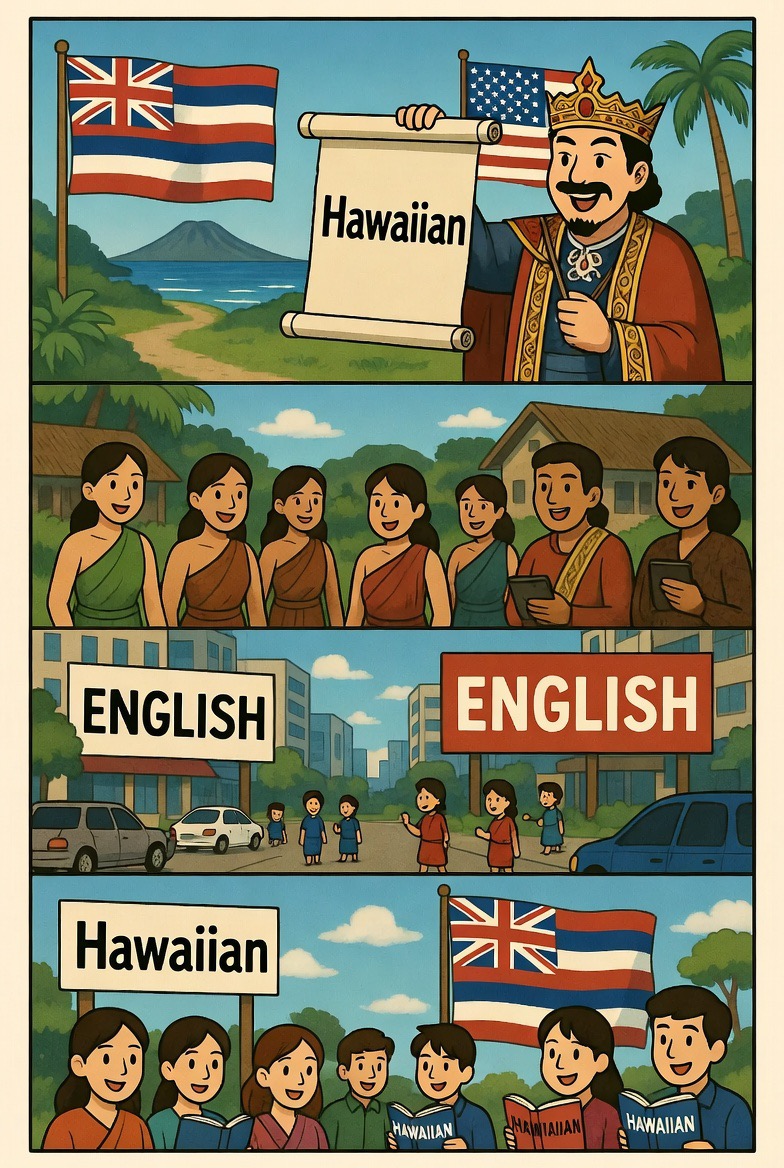
The official languages of Hawaii are Hawaiian and English. The Hawaiian language belongs to the Polynesian language family. It started in the Hawaiian Islands in the Pacific Ocean. King Kamehameha III set up the first Hawaiian-language constitution in 1839.
The language used to be spoken by a large number of people. However, English has almost completely taken over and many native speakers have disappeared. The number of Hawaiian native speakers is less than 0.1% of the population. In 1978, it finally became the official language of the State, along with English. The Hawaiian language remains as street and place names, and locals are studying Hawaiian once again.
和文
ハワイの公用語はハワイ語と英語である。ハワイの言語はポリネシア語族に属している。それは太平洋のハワイ諸島で始まった。1839年にカメハメハ3世がハワイ語の最初の憲法を設定した。
その言語はかつては多くの人に話されていた。しかしながら、英語がほぼ完全に優勢になって、その母語話者の多くは姿を消した。ハワイ語を母語とする人の数は人口の0.1%より少ない。1978年に、ようやくそれは英語とともに、州の公用語となった。ハワイ語は通りや地名として残っており、地元の人たちはハワイ語をもう一度勉強している。
① The official languages of Hawaii are Hawaiian and English.
和訳
ハワイの公用語はハワイ語と英語です。
文型
SVC(第2文型)
S(主語):The official languages of Hawaii
V(動詞):are
C(補語):Hawaiian and English
補語(C)は主語(S)を説明しています。
The official languages = Hawaiian and English
となる関係です。
文法
The official languages
official(形容詞)「公の、公式の」
languages(名詞・複数)
of Hawaii
「ハワイの」
前置詞 of が languages を後ろから修飾
② The Hawaiian language belongs to the Polynesian language family.
和訳
ハワイ語はポリネシア語族に属しています。
文型
SV(第1文型)
S:The Hawaiian language
V:belongs
※ to the Polynesian language family は前置詞句なので文型には入りません。
文法
belong to ~
「~に属する」
自動詞なので to が必要です。
③ It started in the Hawaiian Islands in the Pacific Ocean.
和訳
それは太平洋のハワイ諸島で始まりました。
文型
SV(第1文型)
S:It
V:started
「in ~」は場所を表す前置詞句なので文型には含まれません。
文法
It
前文の The Hawaiian language を指す。
in the Hawaiian Islands
「ハワイ諸島で」
in the Pacific Ocean
「太平洋にある」
Hawaiian Islands を後ろから説明しています。
④ King Kamehameha III set up the first Hawaiian-language constitution in 1839.
和訳
1839年にカメハメハ3世は最初のハワイ語の憲法を制定しました。
文型
SVO(第3文型)
S:King Kamehameha III
V:set up
O:the first Hawaiian-language constitution
in 1839 は時を表す副詞句です。
文法
set up
句動詞
「設立する・制定する」
the first
「最初の」
Hawaiian-language
名詞を修飾する複合形容詞
「ハワイ語による」
⑤ The language used to be spoken by a large number of people.
和訳
その言語はかつて多くの人々に話されていました。
文型
SV(第1文型)
S:The language
V:used to be spoken
「by a large number of people」は前置詞句です。
文法
used to
used to + 動詞の原形
「以前は~だった」
ここでは
used to be spoken
なので
「以前は話されていた」
になります。
be spoken
受動態
be + 過去分詞
「話される」
by a large number of people
「多くの人々によって」
a large number of + 複数名詞
= たくさんの~
⑥ However, English has almost completely taken over and many native speakers have disappeared.
和訳
しかし、英語がほぼ完全に取って代わり、多くの母語話者はいなくなってしまいました。
この文は and で2つの文がつながっています。
前半
English has almost completely taken over
文型
SV(第1文型)
S:English
V:has taken over
文法
現在完了
has + 過去分詞
現在まで影響が続いていることを表します。
take over
「取って代わる」
後半
many native speakers have disappeared
文型
SV(第1文型)
S:many native speakers
V:have disappeared
文法
disappear
自動詞
「姿を消える」
現在完了なので
「姿を消してしまった」
という意味になります。
⑦ The number of Hawaiian native speakers is less than 0.1% of the population.
和訳
ハワイ語を母語とする人の数は人口の0.1%未満です。
文型
SVC(第2文型)
S:The number of Hawaiian native speakers
V:is
C:less than 0.1% of the population
補語が「どのくらいか」を説明しています。
文法
The number of
「~の数」
主語は number なので動詞は is
A number of ~(たくさんの~)とは意味も動詞の一致も異なるので注意。
less than
「~未満」
⑧ In 1978, it finally became the official language of the State, along with English.
和訳
1978年に、それはようやく英語とともに州の公用語になりました。
文型
SVC(第2文型)
S:it
V:became
C:the official language of the State
along with English は前置詞句です。
文法
became
become の過去形
「~になる」
along with
「~とともに」
⑨ The Hawaiian language remains as street and place names, and locals are studying Hawaiian once again.
この文も and で2つの文がつながっています。
前半
The Hawaiian language remains as street and place names.
和訳
ハワイ語は通りや地名として残っています。
文型
SV(第1文型)
S:The Hawaiian language
V:remains
as street and place names は「~として」という前置詞句なので文型には含まれません。
文法
remain
「残る」
as
「~として」
後半
locals are studying Hawaiian once again.
和訳
地元の人々は再びハワイ語を学んでいます。
文型
SVO(第3文型)
S:locals
V:are studying
O:Hawaiian
once again は副詞句です。
文法
現在進行形
are studying
「今学んでいる」
once again
「もう一度、再び」
ドライブを危険にするもの
What are the factors that can make a car journey dangerous? Bad weather such as freezing conditions can, of course, put drivers in danger by making roads easy to slip on. Wild storms can blow many things, such as tree branches, into the path of traffic, forcing drivers to take severe measures to avoid them. Being too tired can also be a cause of accidents. The police advise drivers to take a rest on long journeys so that they don’t fall asleep. Police warn passengers as well as drivers to fasten their seat belts to avoid major accidents.
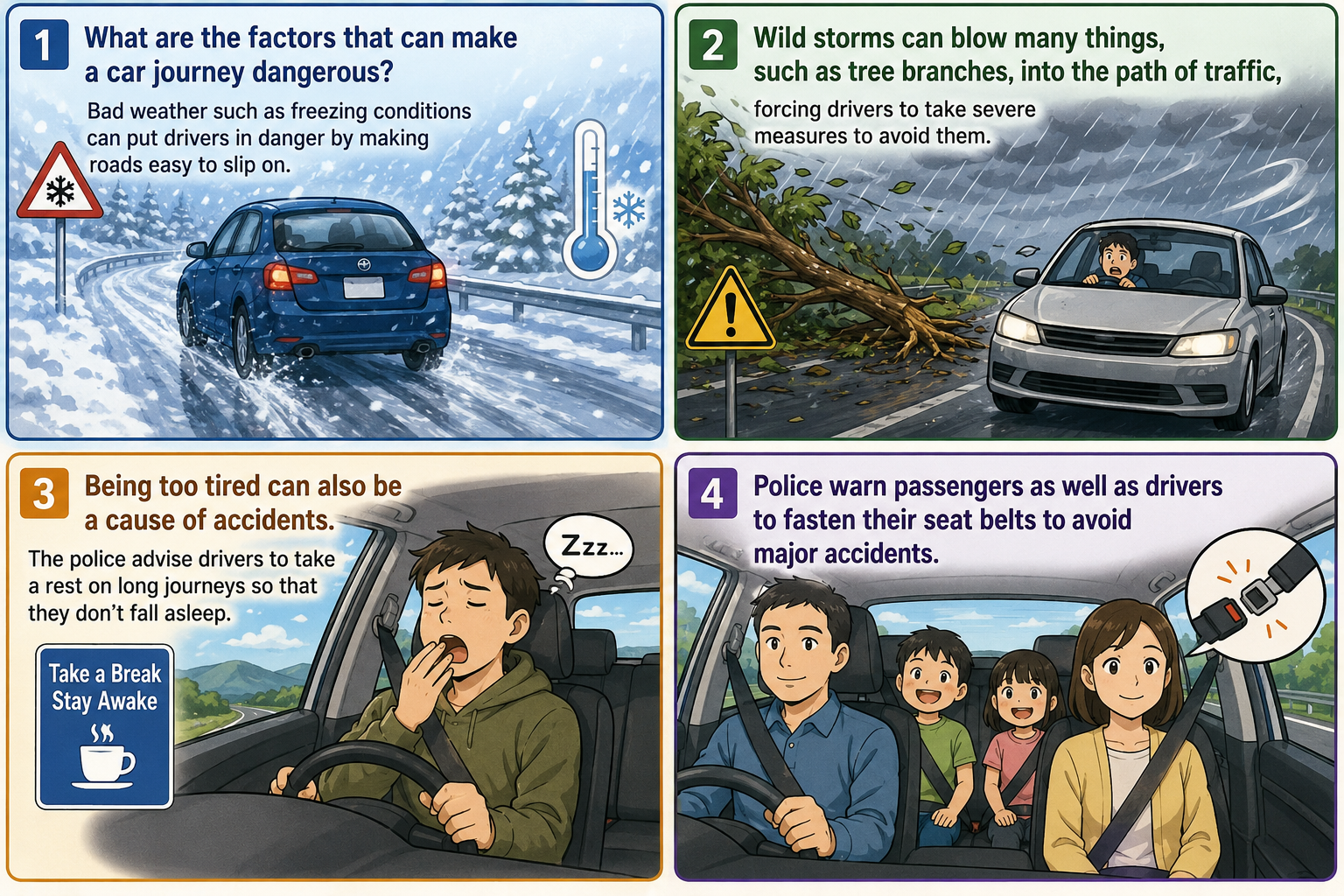
車の旅を危険にし得る要因にはどんなものがあるか。凍るように寒い状態といった悪天候は当然、道路を滑りやすくしてドライバーを危険にさらすことがある。激しい嵐は通行路に木の枝のような多くの物を吹き飛ばし、ドライバーはそれらを避けようと厳しい操作を強いられることがある。過労もまた事故の原因になり得る。警察は、眠らないようにと、長距離運転では休息を取るようにドライバーに助言している。警察は、重大な事故を避けるためにドライバー同様に乗っている人にもシートベルトをするようにと注意している。
① What are the factors that can make a car journey dangerous?
文型
SVC(第2文型)
S = What
V = are
C = the factors that can make a car journey dangerous
「What are ~?」で
「~は何ですか?」
名詞句の中身
the factors that can make a car journey dangerous
ここは関係代名詞 that。
the factors(要因)
that ~(その要因は…)
つまり
the factors that can make a car journey dangerous
=
「車の旅を危険にし得る要因」
make の文型
that節の中は
that can make a car journey dangerous
これは
SVOC(第5文型)
S = that(=factors)
V = can make
O = a car journey
C = dangerous
「車の旅を危険な状態にする」
make O C
=
「OをCの状態にする」
② Bad weather such as freezing conditions can, of course, put drivers in danger by making roads easy to slip on.
文型
SVO(第3文型)
S = Bad weather
V = can put
O = drivers
in danger
put A in danger
「Aを危険にさらす」
in danger は前置詞句なので修飾語です。
such as
such as freezing conditions
「例えば凍結状態のような」
Bad weather を説明しています。
by making…
by は
「〜することによって」
making の中身
making roads easy to slip on
これは
SVOC(第5文型)
S = (Bad weather)
V = making
O = roads
C = easy to slip on
つまり
「道路を滑りやすくする」
easy to slip on
ここは
easy + 不定詞
「〜しやすい」
slip on roads
本来
slip on roads
ですが
roads が前へ出ているので
roads are easy to slip on
となっています。
③ Wild storms can blow many things, such as tree branches, into the path of traffic, forcing drivers to take severe measures to avoid them.
文型
SVO(第3文型)
S = Wild storms
V = can blow
O = many things
such as
many things を説明
「例えば木の枝」
into the path of traffic
前置詞句
「交通の進路へ」
forcing…
これは
現在分詞
「そしてその結果〜することになる」
forcing の文型
forcing drivers to take…
SVOC(第5文型)
S = Wild storms
V = forcing
O = drivers
C = to take severe measures
force O to V
「Oに〜することを強いる」
take severe measures
take measures
「対策を講じる」
severe は measures を修飾
「厳しい対策」
to avoid them
不定詞
「それらを避けるために」
them
=
many things
(木の枝など)
④ Being too tired can also be a cause of accidents.
文型
SVC(第2文型)
S = Being too tired
V = can be
C = a cause of accidents
Being too tired
動名詞
「疲れすぎていること」
名詞として主語になっています。
cause of
「〜の原因」
⑤ The police advise drivers to take a rest on long journeys so that they don’t fall asleep.
文型
SVOC(第5文型)
S = The police
V = advise
O = drivers
C = to take a rest
advise O to V
「Oに〜するよう助言する」
on long journeys
前置詞句
「長距離の旅では」
so that
「〜するように」
「〜しないために」
目的を表します。
they don’t fall asleep
S = they
V = don’t fall
C = asleep
ここは
SVC(第2文型)
fall asleep
=
「眠ってしまう」
asleep は形容詞です。
⑥ Police warn passengers as well as drivers to fasten their seat belts to avoid major accidents.
文型
SVOC(第5文型)
S = Police
V = warn
O = passengers as well as drivers
C = to fasten their seat belts
warn O to V
「Oに〜するよう警告する」
as well as
「〜だけでなく」
passengers as well as drivers
「運転手だけでなく乗客にも」
to fasten
不定詞
「締めるように」
fasten one’s seat belt
「シートベルトを締める」
to avoid major accidents
不定詞
目的
「重大事故を避けるために」
全文のSVOC一覧
文 文型
What are the factors…? SVC
that can make a car journey dangerous SVOC(make O C)
Bad weather can put drivers… SVO
making roads easy to slip on SVOC(make O C)
Wild storms can blow many things… SVO
forcing drivers to take… SVOC(force O to V)
Being too tired can be… SVC
The police advise drivers to take… SVOC(advise O to V)
they don’t fall asleep SVC(fall asleep)
Police warn passengers… SVOC(warn O to V)
乗客サービス員
Tim works as a customer service staff member for a new airline. Many customers have problems with their baggage, and he often has to explain that they must pay for check-in baggage. He tries to solve customers’ problems and give good advice, even if the customer is at fault for not following the check-in rules. He feels his work is valuable to the airline’s customers and he is proud of the company he works for. Even if an angry customer shouts at him, or comes across as very unfriendly, he is able to stay calm and will always provide customers with suitable solutions to their problems.
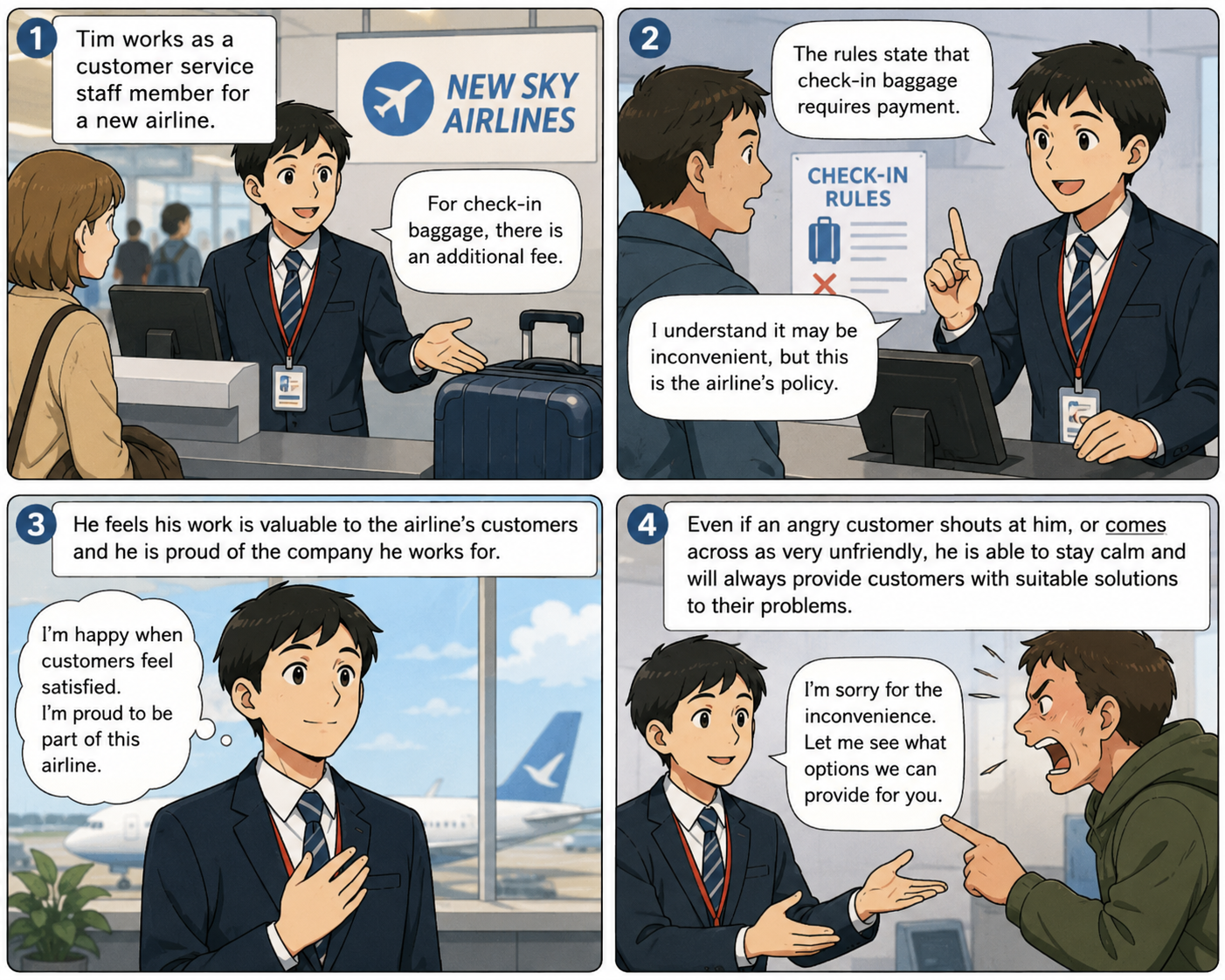
ティムは新しい航空会社で乗客サービス員として働いている。荷物に問題がある乗客が多く、彼は彼らに預け入れ荷物にお金を支払う必要があると説明しなければならないことがよくある。たとえ搭乗規則に従わない乗客に責任があるにしても、彼は乗客の問題を解決し、良い助言をしようと努めている。ティムは彼の仕事は航空会社の乗客にとって有益であると感じ、自分の働いている会社に誇りを持っている。たとえ腹を立てた乗客が彼にどなったり、ひどく敵対的に見えたりしても、彼は落ち着いていられ、いつでも彼らの問題への適切な解決策を顧客に提供するのだ。
① Tim works as a customer service staff member for a new airline.
SV
S:Tim
V:works
「work」は**完全自動詞(SV)**です。
修飾語
as a customer service staff member
→「~として」
work as ~ = 「~として働く」
例
She works as a teacher.
I work as an engineer.
for a new airline
前置詞句
「新しい航空会社で」
ここでは
staff member for ~
「~の職員」
と考えると自然です。
和訳
ティムは新しい航空会社で乗客サービス係として働いている。
② Many customers have problems with their baggage, and he often has to explain that they must pay for check-in baggage.
この文は
等位接続詞 and
で二つの文がつながっています。
前半
Many customers have problems with their baggage.
SVO
S
Many customers
V
have
O
problems
with their baggage
前置詞句
「荷物について」
have problems with ~
=
「~に問題がある」
頻出表現です。
後半
he often has to explain that they must pay for check-in baggage.
SVO
S
he
V
has
O
to explain…
ここは
have to
なので
「~しなければならない」
助動詞のように働いています。
つまり
実質
S
he
V
has to explain
O
that節
です。
that節
that they must pay for check-in baggage
これが explain の目的語。
that節の中
S
they
V
must pay
for check-in baggage
pay for ~
「~に対して料金を払う」
pay+物
ではなく
pay for+物
なので注意。
和訳
多くの乗客は荷物について問題を抱えており、彼は預け荷物には料金を支払わなければならないことを説明することがよくある。
③ He tries to solve customers’ problems and give good advice, even if the customer is at fault for not following the check-in rules.
この文が一番大事です。
主節
He tries to solve customers’ problems and give good advice
SVO
S
He
V
tries
O
to solve…
and
(to) give…
つまり
try to A and (to) B
です。
toは二つ目で省略されています。
solve
他動詞
solve problems
問題を解決する
give advice
give advice
助言を与える
advice は不可算名詞です。
even if
「たとえ~でも」
譲歩を表す接続詞
if節
the customer is at fault
SVC
S
the customer
V
is
C
at fault
at fault
熟語
「責任がある」
for~
for not following the check-in rules
「搭乗規則に従わなかったことについて」
following
前置詞 for の目的語なので
動名詞
following
になります。
check-in rules
複合名詞
check-in が rules を修飾。
和訳
たとえ乗客に搭乗規則を守らなかった責任があっても、彼は問題を解決し、よい助言を与えようとする。
④ He feels his work is valuable to the airline’s customers and he is proud of the company he works for.
ここも二つの文。
前半
He feels his work is valuable to the airline’s customers.
SVO
S
He
V
feels
O
his work is valuable…
目的語は
that が省略された名詞節です。
つまり
He feels (that) his work is valuable.
名詞節の中
S
his work
V
is
C
valuable
valuable to~
「~にとって価値がある」
後半
he is proud of the company he works for.
SVC
S
he
V
is
C
proud
proud of~
「~を誇りに思う」
the company he works for
関係代名詞が省略されています。
本来
the company
that
he works for
he works for the company
↓
the company (that) he works for
和訳
彼は自分の仕事が航空会社の乗客にとって価値があると感じており、自分が勤めている会社を誇りに思っている。
⑤ Even if an angry customer shouts at him, or comes across as very unfriendly, he is able to stay calm and will always provide customers with suitable solutions to their problems.
一番長い文です。
Even if~
譲歩節
①
an angry customer shouts at him
SV
S
an angry customer
V
shouts
shout at~
「~に怒鳴る」
②
comes across as very unfriendly
Sは省略されています。
つまり
(an angry customer)
comes across…
come across as~
「~のように見える」
very unfriendly
as の補語
主節
he is able to stay calm
SVC
S
he
V
is
C
able
be able to~
「~できる」
stay calm
stay は
SVC
stay+形容詞
calm
補語
and
並列
will always provide…
provide
SVOOではありません。
provide A with B
なので
SVO+前置詞句
S
he
V
will provide
O
customers
with suitable solutions
provide A with B
AにBを提供する
suitable
形容詞
「適切な」
to their problems
solutions to~
「~への解決策」
前置詞は
to
です。
和訳
たとえ怒った乗客が彼に怒鳴ったり、とても不親切な人のように見えたりしても、彼は落ち着いて対応でき、いつでも顧客に問題への適切な解決策を提供する。
この文章で特に覚えたい表現
表現 意味
work as ~として働く
have problems with ~に問題がある
pay for ~の料金を支払う
try to ~しようとする
solve a problem 問題を解決する
give advice 助言する(adviceは不可算)
even if たとえ~でも
be at fault 責任がある
be valuable to ~にとって価値がある
be proud of ~を誇りに思う
shout at ~に怒鳴る
come across as ~のように見える・思われる
be able to ~できる
stay calm 落ち着いている
provide A with B AにBを提供する
solution to ~への解決策